State-by-State Exemption Guide — Workers' Comp Exemption Guide
The definitive state-by-state guide to workers' comp exemptions — filing requirements, eligible parties, renewal deadlines, and the key differences between LLC member, corporate officer, family member, and independent contractor rules in every state.
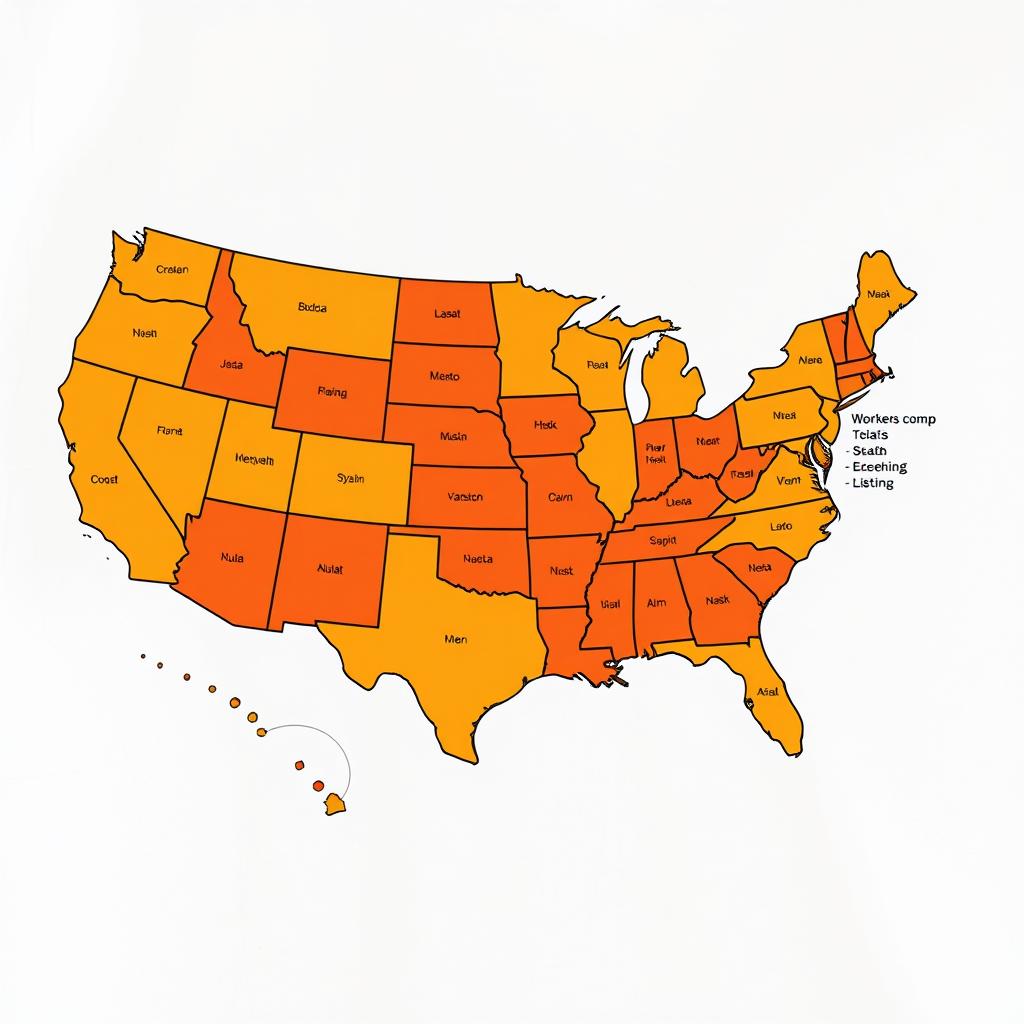
What it covers
- LLC member exemption rules in all 50 states
- Corporate officer exclusion filing requirements by state
- Family member exemption eligibility and definitions
- Independent contractor classification tests by state
- Exemption renewal deadlines and lapse consequences
- Annual filing requirements and state-specific forms
Who it's for
- Business owners unsure of their state's exemption rules
- LLC members who want to know if they can exempt themselves
- Corporate officers exploring exclusion options
- Business owners operating in multiple states
- Contractors managing 1099 subcontractor relationships
Why CCA
- We cover all 50 states — not just the major ones
- Plain-English explanations of complex state rules
- Guidance on renewal requirements before exemptions lapse
Common questions about state-by-state exemption guide
Most states allow LLC members to file exemptions, but the rules vary widely. Florida allows non-construction LLC members to exempt; California generally does not allow LLC member exemptions; Texas doesn't require coverage at all. Each state has different eligibility criteria, limits on the number of exempt members, and industry restrictions.
Start with your state and business entity type. Different rules apply to sole proprietors, LLC members, corporate officers, and partners. Then consider your industry — construction typically has stricter rules in every state. Finally, consider your relationship to the business — a family member employee may have different options than an unrelated officer.
State workers' comp exemption rules change regularly through legislation and administrative rulemaking. Florida, California, and New York have all made significant changes in recent years. This is why staying current matters — an exemption strategy that worked five years ago may no longer be valid.
No. Workers' comp exemptions are state-specific. A Florida exemption does not apply to work performed in Georgia. If your employees or officers work in multiple states, you need to understand the rules in each state where work is performed.
Missing renewal deadlines. Many states require annual or biennial renewal of exemptions. When a renewal is missed, the exemption lapses automatically — and the business is immediately out of compliance. The second most common mistake is not updating exemptions after a business structure change.
Workers' comp cost depends on your state, industry, payroll, and claims history. Some business owners qualify for exemptions and pay no premium for themselves. When coverage is required, rates are set per $100 of payroll by job class. We quote your actual situation in about 15 minutes — never a generic estimate.
Yes. Contractors Choice Agency is licensed in all 50 states and provides workers' comp exemption guidance for businesses anywhere in the country — Florida, Texas, California, New York, Georgia, Arizona, Illinois, North Carolina, and every other state.
Typically 15 minutes on a call. We can tell you quickly whether you qualify for an exemption in your state, what needs to be filed, and what the risks are.
We can help you assess the situation, understand your options, and either file the exemption retroactively (if possible) or place the required coverage to stop a stop-work order or avoid further penalties. Bring us your situation and we'll find a path.
It depends on your situation. For working owners with no employees, an exemption saves premium cost but leaves you personally uncovered. For business owners who want protection for themselves, coverage can be better than an exemption. We help you weigh both options honestly.
A.M. Best ratings reflect a carrier's financial strength and ability to pay claims. We place coverage with A-rated carriers so the coverage is actually there when a claim is filed.
In most states, occupational accident insurance cannot legally substitute for workers' comp for employees. However, for truly independent contractors in states that allow it, and for Texas non-subscribers, occupational accident insurance is a common and cost-effective alternative that provides medical and disability coverage for work injuries.
The process varies by state, but generally involves documenting that the contractor satisfies the applicable test (ABC test, economic reality test, or control test) — separate business, multiple clients, control over how work is performed, own tools and equipment. Written independent contractor agreements help but are not sufficient on their own.
Business structure (LLC, S-corp, C-corp, sole prop), state of operation, number and relationship of owners and officers, family members working in the business, 1099 contractors used, current workers' comp situation, and any prior audit findings or compliance issues.
Not automatically. If a contractor is genuinely independent (their own business, their own insurance), your workers' comp does not cover them. If they are misclassified — truly employees working under your direction — your workers' comp may be required to cover them, and if it doesn't, you face personal liability for their injuries.
Seasonal and part-time status does not by itself make someone an independent contractor. The classification depends on the applicable state test — how much control you have over their work, whether they work for other businesses, and whether they have an independently established business. Misclassifying seasonal workers as contractors is a common audit trigger.
A retroactively voided exemption means you are treated as if the person was an employee and should have been covered for the entire period the exemption was in place. This can result in retroactive premium assessments, penalty audits, and — if an injury occurred during the lapsed period — personal liability for the injured worker's costs.
Yes. If you operate through multiple LLCs or corporations, we help you understand which entity each worker belongs to, which exemptions apply to which entities, and how to structure your coverage so there are no gaps between entities.
Yes. The most common scenario is an owner who files an exemption for themselves while carrying workers' comp for their employees. We coordinate both — the exemption filing for the owner and the coverage policy for the team — so there are no gaps.
Pair it with related coverage
Ready to sort out your WC exemption?
Get guidance on workers' comp exemptions in your state — LLC member, family member, corporate officer, independent contractor, or alternative coverage. 15-minute response.